↓ Skip to main content

Putting Tradition into Practice: Heritage, Place and Design

Overview of attention for book
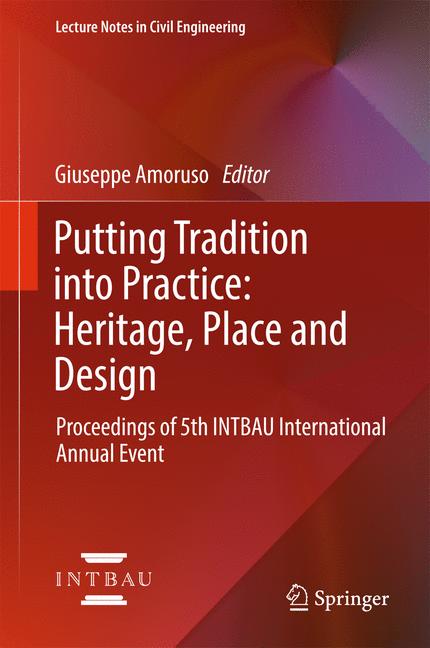
Cover of 'Putting Tradition into Practice: Heritage, Place and Design'

Table of Contents

  1. Book Overview
  2. Chapter 1 Enhancing Not-Outstanding Cultural Landscapes in a European Perspective: A Challenge for Digitization
  3. Chapter 2 New Science, New Architecture… New Urban Agenda?
  4. Chapter 3 How to Imbue Practice with Tradition
  5. Chapter 4 The Organic Reconstruction of the City 2.0 Keep It Simple
  6. Chapter 5 True, False or Ordered? Some Architectures to Think About Reconstruction
  7. Chapter 6 The Environmental, Social and Economic Impacts of the Reconstruction Plan in Onna
  8. Chapter 7 Developing Tradition: A Case of Heritage Foundation of Pakistan
  9. Chapter 8 Survey and Earthquake: The Case of Visso
  10. Chapter 9 Methodology of Analysis and Virtual Recomposition: The Case of Retrosi, Amatrice
  11. Chapter 10 The Architectural Heritage in Seismic Area: Geometrical Survey for Damage Analysis and Strenghtening Design
  12. Chapter 11 Project Design “Within” Survey. A Model of Action for Smaller Historic Centres Struck by Earthquakes
  13. Chapter 12 The Reconstruction of L’Aquila: A New Role of Ancient Walls
  14. Chapter 13 Design as a Tool for Bringing New Life to the Historic Centre of L’Aquila
  15. Chapter 14 Hydrogeological and Seismic Risk Mitigation Interventions. Interplay with the Existing Buildings and the Territory
  16. Chapter 15 Architectural Representation in the Spanish Renaissance: Some Examples from the City of Lugo
  17. Chapter 16 From the Ruin to the Temple, Passing by the Butchers. A Reconstitution of the Temple of Diana in Evora, Based on Literary and Iconographic Sources
  18. Chapter 17 Use of Digital Collections as a Source of Architectural Treatises: Old Sources for the New Classical Architect
  19. Chapter 18 Represent and Enhance the Historical and Architectural Heritage: The Trident of Rome Between Tradition and Innovation
  20. Chapter 19 Francesco Valenti’s Restoration Design of Santissima Annunziata of Catalans Church in Messina. A Walkthrough Among Survey and Graphic Representation
  21. Chapter 20 Notes on Historical Maps of Abruzzo: From Itineraria Picta to Maps
  22. Chapter 21 A Critical Redrawing of the Tables Signed by Carlo Vanvitelli for the Construction of Villa Comunale in Naples
  23. Chapter 22 The Camillo Boito Historical Heritage Photo Collection as an Iconographical Fund for the “National Stile”
  24. Chapter 23 Researches on Architectural Heritage Drawing Between Italy and Slovenia: The Antonio Lasciac’s Villa
  25. Chapter 24 Rethinking Salerno After the 1954 Flood: The Arrival of Plinio Marconi in the City
  26. Chapter 25 Gustavo Giovannoni: The Complete Architect
  27. Chapter 26 Between Tradition and Experimentation. The Balilla House in Teramo by Enrico Del Debbio
  28. Chapter 27 Learning Through Discovery: Different Techniques to Represent the Forgotten Cultural Heritage. Knowing Cervia’s Colonia Varese Across Historical Analysis and Contemporary Design
  29. Chapter 28 The Renewal of the City of L’Aquila: The INA Palace by Vittorio Morpurgo
  30. Chapter 29 Designs by Louis de Soissons for the Commonwealth War Cemetery in Cassino
  31. Chapter 30 Valorisation Experience Process for Raising Awareness of the Eastern Modernist Architecture Towards Layperson Audience
  32. Chapter 31 Past Visions, Future Memories: The Drawings of William Hardy Wilson
  33. Chapter 32 Sala Della Vigna at Belriguardo. A Polyphony of Proportions That the Renaissance Mind Comprehended and the Renaissance Eye was Able to See
  34. Chapter 33 The Crociera Room of Villa Barbaro in Maser. Perspective Restitution of Architectural Frescoes
  35. Chapter 34 The Relationship Between Real and Illusory Architecture: Survey and Analysis of the Ex-refectory of Orsoline’s Convent in Rome
  36. Chapter 35 Architectural Perspective in Two Seventeenth-Century Galleries in Genoa
  37. Chapter 36 Drawing as a Guide. Observing the Roman Seashore
  38. Chapter 37 3D Surveys and Virtual Explorations in the Places of Remembrance: The Chapel of Monte dei Poveri in Naples
  39. Chapter 38 Some Reflections on the Non-constructible Polygon in Santa Maria Novella, Florence
  40. Chapter 39 Formal Innovations in Two Sixteenth-Century Helicoidal Staircases of Vignola and Mascarino
  41. Chapter 40 Baroque Topologies: Novel Approaches to Analysis and Representation of the Baroque Interior in the Era of Big Data
  42. Chapter 41 Heritage and Places: Rediscovering and Enhancing Cultural Identities Lost Under 1669 Mount Etna Lava Flow
  43. Chapter 42 Survey for Knowledge and Communication of the Architectural Heritage: Case Study Rocca di Codiponte
  44. Chapter 43 The Survey Drawing as a Tool of Knowledge: The Case of Casamari Abbey in Veroli
  45. Chapter 44 The Piazza Duomo of Acireale: Significance and Representation
  46. Chapter 45 The Theme of the Kasbah in Islamic – Mediterranean Architecture. Settlements Along Draâ Valley, Morocco
  47. Chapter 46 The Survey of Vernacular Architecture: Casa Grandeth
  48. Chapter 47 Photo-Modeling for the Documentation of the Restoration Site. The Church of the Complex of the Ospedale dello Spirito Santo in Lecce
  49. Chapter 48 The Hermitage of Sant’Alberto in Butrio: Methodologies of Integrated Survey Between Tradition and Digital Innovation
  50. Chapter 49 Pinnettas : Traditional Shepherds’ Huts of Sardinia. Geometry, Shape and Materials
  51. Chapter 50 The Technologies of Architectural Survey: A New Comparison Based on the Tower of Sotillo de la Ribera, Burgos
  52. Chapter 51 The Territories of Samarcanda Manuscript. A Draft of the Crusaders Krak Knights Representation in Syria. A “Model” for Future Memory
  53. Chapter 52 The Scuola Officina Meccanica in Villaggio Monte Degli Ulivi in Riesi. Reading and Analysis Through Surveying
  54. Chapter 53 The Digital Documentation of the Florentine Complex of Santa Maria Maddalena De’ Pazzi
  55. Chapter 54 Religiuos Festivals Machines as Transition from Popular Culture Towards Industrial Design: Construction and Interpretation of the Giglio of Barra and Nola in Southern Italy
  56. Chapter 55 An Integrated Programme for the Conservation and Valorisation of the Tower of Frederick in Enna
  57. Chapter 56 Survey of Comfort and Cityscape: Methodological Considerations for the Definition of a Graphic Code and Related Experimental Applications
  58. Chapter 57 A Development Project for the United Nations. The Digital Survey for the Planning of East Jerusalem
  59. Chapter 58 Urban Regeneration of the Old Town Centre of Bari: A Holistic Approach
  60. Chapter 59 A Virtual Museum for Appreciating Pescara’s Cultural Heritage
  61. Chapter 60 Exploring the City. Valorisation of Culture Through Situated and Informal Learning
  62. Chapter 61 Visual Devices for Representing, Communicating and Promoting the City
  63. Chapter 62 Design Strategies for Cultural Heritage: Innovating Tradition Within Museums
  64. Chapter 63 Digital Interactive Mollino. A Collection of 3D Models from Carlo Mollino’s Design Drawings
  65. Chapter 64 Enacting the Genius Loci of the Place Through a Digital Storyteller. Reflections from an Interactive Exhibit
  66. Chapter 65 Communicating Heritage Through Intertwining Theory and Studio Based Course in Architectural Education
  67. Chapter 66 3D Printing in Presentation Architecture Projects
  68. Chapter 67 Designing the Ideal City of Aristotle’s Thought
  69. Chapter 68 Hypothesis of Reconstruction of Ancient Cities Through 3D Printing: The Case-Study of Thurii
  70. Chapter 69 Physical Scale Models as Diffusion Tools of Disappeared Heritage
  71. Chapter 70 The Classical Theatre and the Material Culture. The Example of Lipari’s Masks
  72. Chapter 71 From Tradition to Practice: Bringing Up-to-Date the Holistic Approach of the Masters of the Past Through Digital Tools
  73. Chapter 72 ICT to Communicate, Represent and Enhance an Archaeological Area
  74. Chapter 73 The Last Supper Interactive Project. The Illusion of Reality: Perspective and Perception
  75. Chapter 74 Saturnia Museum: The Architectural Survey for the Urban Museum and Enhancement of the Historic Centre
  76. Chapter 75 Photography and Video for a Representation of the Intangible Cultural Heritage of Abruzzo
  77. Chapter 76 Intangible Perspectives on Tangible Heritage. A New Way of Understanding and Communicating Architecture: The Case of Francesco Clerici’s Works
  78. Chapter 77 Intangible Cultural Heritage: Poetics of the Ephemeral in the Land of Abruzzo
  79. Chapter 78 The Use of Remote Monitored Mobile Tools for the Survey of Architectural and Archaeological Heritage
  80. Chapter 79 Developing Semantic Models for the Historic Urban Landscape Regeneration
  81. Chapter 80 Exploratory Catalog of Architectures and Rural Micro-Architectures in the National Park of Cilento
  82. Chapter 81 Inclusive Placemaking: Building Future on Local Heritage
  83. Chapter 82 Representation of Enjoyment in Ecomuseums. Analysis for Creative Placemaking
  84. Chapter 83 Coding for Community
  85. Chapter 84 Viewsheds and Cultural Landscape. A Geometrical Approach to Visual Spatial Analysis
  86. Chapter 85 Different Matrixes of Sicilian Landscapes in Le Cento Città d’Italia . Social Identity, Cultural Landscape and Collective Consciousness In-Between Texts and Images
  87. Chapter 86 The Urban Landscape and Its Social Representation. A Cognitive Research Approach to Rethinking Historical Cultural Identities
  88. Chapter 87 Lookouts as a Tool for the Valorisation of Urban Landscape. The Case Study of Madrid
  89. Chapter 88 Ancient Residences and Vineyards in the Park of the Turin Hills
  90. Chapter 89 Metamorphosis: Restoring the Manila Metropolitan Theatre in the Urban Imagination and Collective Memory
  91. Chapter 90 Representing Place, Branding Place. Designing Place Identity Enhancing the Cultural Heritage
  92. Chapter 91 Environmental Graphics as Atmospheres Generators
  93. Chapter 92 Representation Tools for Pedestrian and Cyclistic Fruition of Urban Area
  94. Chapter 93 Signs and Structures of Oltrepò Pavese: Summary for the Graphic Representation of the Traditional Cityscape
  95. Chapter 94 Strategic Design for the Enhancement of Cultural Itineraries and Related Territories. “Via Regina”: A European Cultural Itinerary
  96. Chapter 95 Exploring the Landscape Through Drawings, with Historic Routes and Contemporary Directions
  97. Chapter 96 Lost Highways. Sinan’s Architectural and Urban Transformations in Thrace as Traces of the Ottoman Civilization and as Possible Cultural Landscape for the Future
  98. Chapter 97 Drawing for the Future: Micro-cities, Villages and Landscapes of Abruzzo
  99. Chapter 98 To Retrain the Urban Space and the Residence: The Case of Porta Palazzo, Turin
  100. Chapter 99 Cultural Landscapes with a Strong Identity: Havana
  101. Chapter 100 Paradigms for the Meta-Project of a Temporary Pavilion for Chamber Music in Sensitive Cultural Contexts
  102. Chapter 101 The Identity Landscape in the Cataloging of Scattered Assets in the Area of Amelia
  103. Chapter 102 Urban and Architectural Identity, the Meaning of the Architectural Vocabulary
  104. Chapter 103 Learning from the Past: Water Heritage. Landscape Patterns Around Parma
  105. Chapter 104 Cremona City of Water: The River Architecture
  106. Chapter 105 Towards the Knowledge and Conservation of Pre-industrial Architecture in Calabria: Formal, Typological and Constructive Features of Mills Buildings
  107. Chapter 106 Memories of Stone Among the Water Ways: The Mills Valley in Gragnano, Naples
  108. Chapter 107 Historical Towers in the Evolution of the Image of Perugia: Knowledge, Perception and Valorisation of the Landscape
  109. Chapter 108 Built Landscape Typological Components
  110. Chapter 109 History as Tradition. The Relationship with the Historical Context in Recent Projects in Sicily
  111. Chapter 110 Jaat Architecture, Mirror of the Past and Shadow of Future
  112. Chapter 111 The White Stone of South-Eastern Sicily: Urban and Territorial Identity
  113. Chapter 112 Life Beyond Tourism ® for Territories Valorisation
  114. Chapter 113 Adaptive Reuse of Underused Industrial Sites, Case Study: The Superphosphate of Laç
  115. Chapter 114 New into the Ancient – Interventions of Architecture on the Archaelogical Heritage of Santa Maria di Pulsano Abbey at Monte Sant’Angelo
  116. Chapter 115 Language or Tradition? Continuity and Innovation in the Landscape of Ticino
  117. Chapter 116 A Proposal for an Urban Regeneration Project in a Small Quarter in Andorra La Vella
  118. Chapter 117 Houses in the Cultural Landscape of the Western Black Sea Coast
  119. Chapter 118 Methodos, Processes for the Enhancement of Cultural Heritage: The Rehabilitation of the Minor Architecture in Liguria
  120. Chapter 119 Study of the Phenomenon of Upper Kama Architecture: Rehabilitation of Usolye Historic Site
  121. Chapter 120 The Contemporary Urban Design for Living Today the Historic Areas of the City. The Case Study of the Historic Centre of Banyoles
  122. Chapter 121 The Conques Masia Restoration Project
  123. Chapter 122 Restoration and Improvement of Rural Building Heritage: The Trulli
  124. Chapter 123 The Historical Buildings of Minori: A Preliminary Assessment for the Restoration of a Unesco Site
  125. Chapter 124 The Environmental Sustainability of the Manor Farm System
  126. Chapter 125 Railway Transport and “City Gates” in the Development of the City: The Case of Matera
  127. Chapter 126 GIS Model for Morpho-Typology in Historic Preservation and Contextual Design
  128. Chapter 127 Restoring Traditional Architecture and Promoting Earth Building in the M’hamid Oasis: 2012–2014 Campaigns
  129. Chapter 128 Traditional Earth Architecture in the Euro-Mediterranean Region. From Conservation to Knowledge for Sustainable Use
  130. Chapter 129 The Vault in Amiens Cathedral’s Transept
  131. Chapter 130 Study of Tradition and Research of Innovative Stereotomic Bond for Dome in Cut Stone
  132. Chapter 131 Diagnosis for Preservation Design of Royal Villa of Monza Wooden Works
  133. Chapter 132 An Unusual Landscape: Technological Design for Roof
  134. Chapter 133 The Protection of Masonry Structures for the Requalification and Use of the Architectural Heritage: The Historic Buildings of Lioni
  135. Chapter 134 The Fina : A Traditional Mediterranean Urban Design Concept Investigated in Belmonte Calabro Village, Italy. Learning Lessons for Contemporary Urban Policies
  136. Chapter 135 Colour Plan of Valletti Historical Heritage in Varese Ligure
  137. Chapter 136 Recovering Chromatic Space as a Sign of Identity in the Historic City
  138. Chapter 137 Variations of Identity: Tuff as Matter of Architecture. Shades of Light, Time and Colour
  139. Chapter 138 Vista Alegre, to Transpose Form and to Prolong Use [1]
  140. Chapter 139 Utopia. The Design of the Ideal City
  141. Chapter 140 Sociologically Reframing Le Corbusier: Settler Colonialism, Modern Architecture and UNESCO
  142. Chapter 141 Urban Domestic Landscape. Architecture and Design of the Bourgeois House: A Cultural Heritage of the Act of Dwelling
  143. Chapter 142 The “Ephemeral Architectures” as an Example of Play and Re-invention in Shared Processes of Creative Knowledge
  144. Chapter 143 “Prospettiva”: A Contemporary Conceptual Method
  145. Chapter 144 A Brand Design Strategy for Architects’ Creative Thinking: Florestano Di Fausto - A Case Study
  146. Chapter 145 The Role of Public Space in Sustainable Urban Development
  147. Chapter 146 Streets of Hope: An Urbane, Ecological Approach to Temporary Housing for E.U. Asylum Seekers
  148. Chapter 147 Living in Pemba Between Public and Private Space
  149. Chapter 148 Codesign, Social Contracts, Environmental Citizenship. The Case Study of Umbrian Region’s Atlas of Objectives and Lake Trasimeno Landscape Contract
  150. Chapter 149 Carta Di Norcia 2003: Present Situation and Prospects
  151. Chapter 150 The Sustainable Advanced Design for Cultural Institutions
  152. Chapter 151 Community-Based Care for a Living Heritage. The University Colleges of Urbino as a Case Study
  153. Chapter 152 A Model Flexible Design for Pediatric Hospital
  154. Chapter 153 Designing Remains
  155. Chapter 154 Urban Sustainability in Practice: Priorities in India
  156. Chapter 155 Regeneration and Resistance: Exclusive Manchester
  157. Chapter 156 Representative Tools for Participatory Planning in Landscape Heritage Evaluation
  158. Chapter 157 University Workshops as a Way of Dissemination of Architectural Traditions: The Case of the Tile Vault
  159. Chapter 158 An Innovative Training Model on Creative Entrepreneurship: Integrating Local Stakeholders with Summer Academies to Enhance Territorial Heritage
  160. Chapter 159 The Internet of Things as an Integrated Service Platform to Increase Value to the Agriculture Stakeholders
  161. Chapter 160 UAV/Drones as Useful Tools in the Agricultural Production Cycle
  162. Chapter 161 Proposal for the Urban Regeneration of the Suburban District Zen in Palermo, Italy
Overall attention for this book and its chapters

Mentioned by

policy
2 policy sources
twitter
6 X users
facebook
2 Facebook pages
wikipedia
22 Wikipedia pages

Readers on

mendeley
4 Mendeley