| Chapter title |
Systemic fluoride.
|
|---|---|
| Book title |
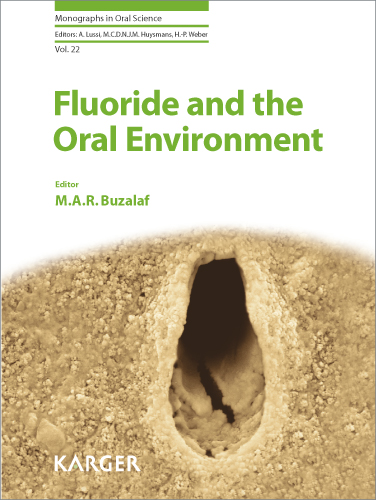
Fluoride and the Oral Environment
|
| Published in |
Monographs in oral science, June 2011
|
| DOI | 10.1159/000325161 |
| Pubmed ID | |
| Book ISBNs |
978-3-80-559659-6, 978-3-80-559658-9
|
| Authors |
Sampaio FC, Levy SM, Sampaio, F.C., Levy, S.M., Sampaio, Fábio Correia, Levy, Steven Marc, Fábio Correia Sampaio, Steven Marc Levy |
| Abstract |
There is substantial evidence that fluoride, through different applications and formulas, works to control caries development. The first observations of fluoride's effects on dental caries were linked to fluoride naturally present in the drinking water, and then from controlled water fluoridation programs. Other systemic methods to deliver fluoride were later suggested, including dietary fluoride supplements such as salt and milk. These systemic methods are now being questioned due to the fact that many studies have indicated that fluoride's action relies mainly on its post-eruptive effect from topical contact with the tooth structure. It is known that even the methods of delivering fluoride known as 'systemic' act mainly through a topical effect when they are in contact with the teeth. The effectiveness of water fluoridation in many geographic areas is lower than in previous eras due to the widespread use of other fluoride modalities. Nevertheless, this evidence should not be interpreted as an indication that systemic methods are no longer relevant ways to deliver fluoride on an individual basis or for collective health programs. Caution must be taken to avoid excess ingestion of fluoride when prescribing dietary fluoride supplements for children in order to minimize the risk of dental fluorosis, particularly if there are other relevant sources of fluoride intake - such as drinking water, salt or milk and/or dentifrice. Safe and effective doses of fluoride can be achieved when combining topical and systemic methods. |

Login to access the Attention Digest and the Sentiment Analysis related to this output.


Mendeley demographics
Geographical breakdown
| Country | Count | As % |
|---|---|---|
| Chile | 1 | 2% |
| Unknown | 63 | 98% |
Demographic breakdown
| Readers by professional status | Count | As % |
|---|---|---|
| Student > Bachelor | 13 | 20% |
| Student > Ph. D. Student | 6 | 9% |
| Student > Doctoral Student | 5 | 8% |
| Student > Master | 3 | 5% |
| Researcher | 3 | 5% |
| Other | 9 | 14% |
| Unknown | 25 | 39% |
| Readers by discipline | Count | As % |
|---|---|---|
| Medicine and Dentistry | 28 | 44% |
| Environmental Science | 2 | 3% |
| Agricultural and Biological Sciences | 2 | 3% |
| Social Sciences | 2 | 3% |
| Engineering | 2 | 3% |
| Other | 3 | 5% |
| Unknown | 25 | 39% |